Screen-time rules that work for young kids
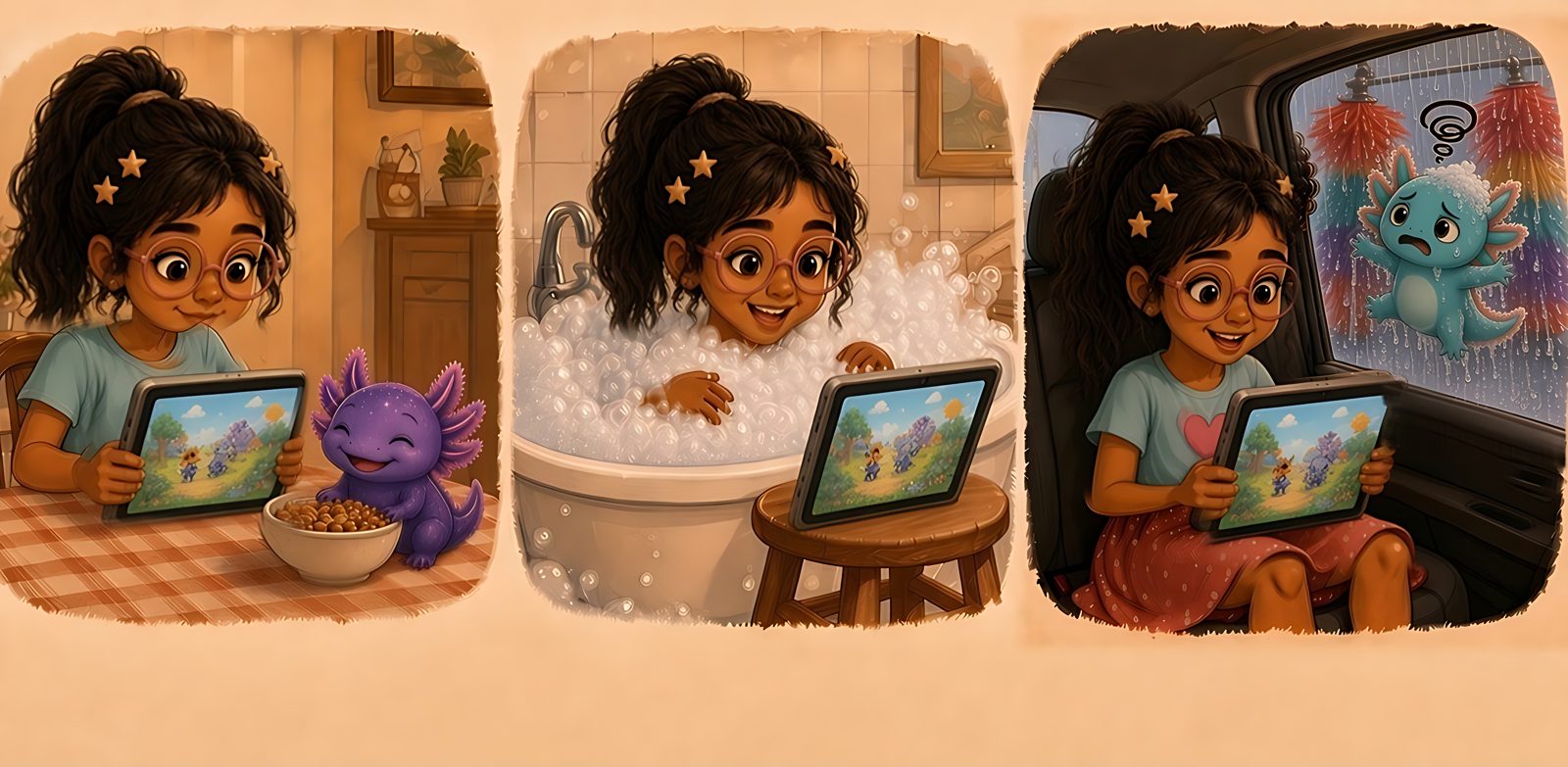
In Look Up, Joy!, a birthday iPad slowly takes over Joy's days. Many parents know that feeling. The good news is that you don't need a complicated system. You need a few clear rules, a calm voice, and a plan you actually keep.
The American Academy of Pediatrics (AAP) offers a simple tool called the 5 C's of media guidance. It is a set of questions to ask yourself, adjusted for your child's age. Here is how to turn each one into a family rule.
1. Child: know how your kid reacts
The AAP notes that some young children demand media often, while others let it go easily. Watch your own child. Does a show leave them calm or cranky? Do they melt down when it ends? Your rules should fit the child you have, not the one in a parenting book.
Rule idea: "We stop when the timer rings, and we always get a warning first."
2. Content: choose what's worth their attention
For toddlers and preschoolers, the AAP points to high-quality educational shows and suggests keeping influencer and random video content to a minimum. If your child watches YouTube, the AAP suggests building a playlist of good videos and turning off autoplay, so the algorithm doesn't decide what comes next.
Rule idea: "Grown-ups pick the shows. Autoplay stays off."
3. Calm: don't make the screen the pacifier
The AAP encourages parents not to hand over a device every time a child is upset or bored. Instead, stay calm, name the feeling ("It's okay to feel frustrated"), and help your child settle. For school-age kids, it recommends putting devices away at bedtime so bodies and brains can rest.
Rule idea: "Devices sleep in the kitchen at night." (In the book, Joy's iPad even takes a "summer vacation.")
4. Crowding out: protect play, books, and people
The AAP warns that screens can crowd out running around outside, looking at books, and chatting with family. It also advises against giving young children open access to a tablet or phone. Set aside a little time every day to play, read, or get outside together.
Rule idea: "Tablets live on the shelf, not in backpacks or bedrooms."
5. Communication: talk about what they see
Even little ones understand a lot. The AAP suggests talking about the "good" and "bad" choices characters make, and about ads. Older kids should know they can tell you about anything creepy or upsetting they see online.
Rule idea: "If something online feels weird, tell a grown-up. You will never be in trouble for telling."
Put it in writing
The AAP's free Family Media Plan tool helps you write your rules down, and it includes rules for parents too. Kids notice when we put our own phones away at dinner. Write your plan together, stick it on the fridge, and pray for patience on the hard days. Like Joy, everyone has a few long, sulky days at first. It gets easier.
- AAP / HealthyChildren.org: Kids & Screen Time: 5 C's Questions for Toddlers & Preschoolers
- AAP / HealthyChildren.org: Kids & Screens: 5 C's Questions for School-Age Children
- AAP Family Media Plan
General information only, not medical advice.